Research Cloning
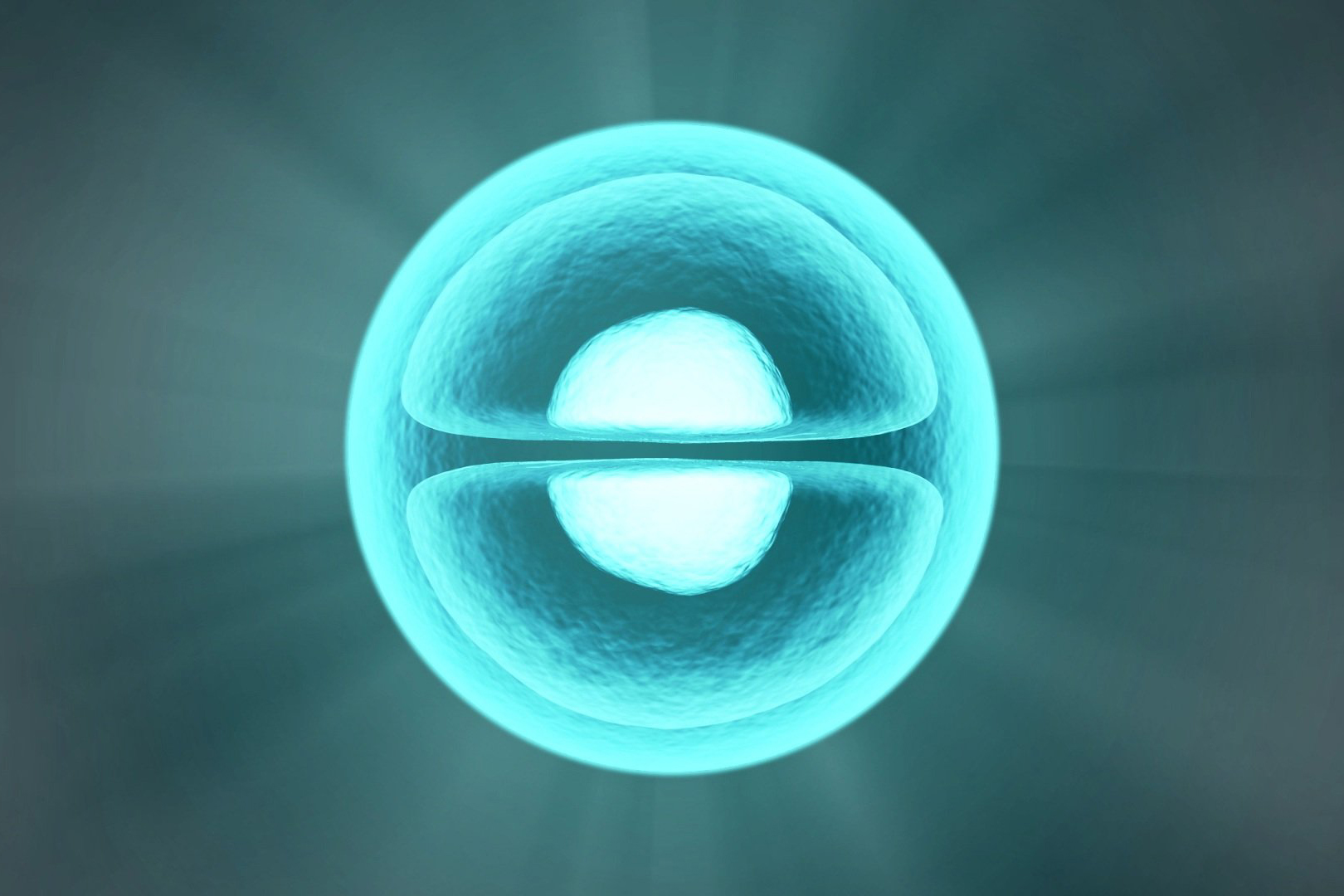
The sexual reproduction for many living organisms takes place through the formation and recombination of germ cells (sperm cells and egg cells). A new genome originates from the composition between paternal and maternal genotypes. The term “cloning” is in contrast a form of asexual or vegetative multiplying, in which the genome of the respective organism is duplicated. In the process of cloning, there is no reorganization (recombination) of genes; rather a nearly or even completely identical genetic “copy” of the original organism arises.
The object of this focal point is cloning for research and therapeutic purposes. Reproductive cloning, however, is only considered insofar as the techniques are identical to a certain degree.
To avoid possible misunderstandings, the term therapeutic cloning, which dominates the public debate, will be substituted and complemented with the term “research cloning” in the following text. A major part of the current research does not aim at concrete therapeutic purposes; rather it mainly belongs to the field of basic research. This basic research can and should lead to the development of new therapies on the long run, but is also used above all to achieve a basic understanding of the scientific relevant processes.
Somatic cell nuclear transfer (SCNT) as central method of research cloning
In the laboratory, organisms can be artificially cloned in various ways. The so-called cell nuclear transfer is the most important method for research cloning. Using Somatic Cell Nuclear Transfer (SCNT), the nucleus of any somatic cell is transferred into an egg cell whose nucleus has been removed. The nucleus can be isolated from practically any adult somatic cell of a donor. The egg cell gained by means of puncture from the ovaries of a donor after a special hormonal treatment is then enucleated. The enucleation takes place using a micro pipette which sucks off the nucleus of the egg cell and substitutes it with the nucleus extracted from the somatic cell. The transfer of the new nucleus takes place through injecting the nucleus into the cytoplasm of the egg cell. The egg cell sends out impulses whose mode of action is so far unknown. These impulses bring about a reprogramming of the cell nucleus which causes the nucleus to lose its specialization. This way the nucleus will be restored from its already differentiated state back to the state which enables the development of the embryo. To date, the efficiency of the cell nuclear transfer process has been very low, and significant research efforts are still focussed on the fundamental understanding of the processes involved.
Considering the genetic material contained in the nucleus, the cloned embryo is genetically identical with the donated nucleus. The Mitochondria, i.e. the cell components which serve the production of energy inside the cell, are derived from the egg cell. The clone developed as a result of the cell nuclear transfer is genetically almost completely identical with the donor of the transferred nucleus. A complete identity is only accomplished, when the donor of the nucleus and the donor of egg cell are genetically identical.
The method of cell nuclear transfer gained recognition through the results of the team of Ian Wilmut's research team. The team succeeded in 1997 for the first time in producing and fully developing a mammal-embryo by means of transferring the nucleus of an adult somatic cell into an enucleated egg cell. The cloned sheep Dolly stands for the success of the research, yet also for the possibility of using the cloning technique for reproductive purposes which are ethically extremely controversial.
With regard to the technical aspect, research cloning and cloning for reproductive purposes are not fundamentally different. However, it is decisive that the embryo in the case of research cloning is not implanted into the uterus in order to be born. Rather it gets destroyed in an early stage of the embryonic development (the blastocyst stage) so that embryonic stem cells can be extracted and differentiated in vitro into specific cell types. It is not inappropriate to describe the approach as “therapeutic cloning”, since there is the hope that the cells which have become available can at the end be transferred again to the donor organism for therapeutic purposes. Currently, cloning is, however, mostly conducted for research purposes, if it’s legally permitted at all.
Goals of research cloning
A primary target of research or therapeutic cloning is the production of embryonic cells (ES-cells). These cells are of interest for the researchers because they can, under appropriate circumstances, be developed into almost all different kinds of somatic cells. This ability is described as pluripotency. It is controversial, whether the stem cells produced by means of cloning can become totipotent cells under cell culture conditions. An experimental evidence of totipotency of embryonic stem cells is prohibited for moral reasons, since it would be necessary to let a complete organism grow to maturity.
A long-term aim of research cloning is the production of autologous stem cells for therapeutic purposes. These are stem cells, whose genetic features are to a large extent identical with the genetic features of the patient to be treated. In this way it would be guaranteed that the cell or the tissue incorporated in the organism for therapeutic purposes is highly compatible with the immune system. Hence a number of complications which occur during the application of heterologous transplants (such as the case in organ donation) would be avoided. In particular it is hoped, in the case of research success, to be able to provide a transplantation medicine by means of the cloning technique by virtue of which the as of today still necessary long-term administration of immunosuppressivant would be unnecessary or at least diminished and the additional current scarcity of transplants would be relieved.
The first successful cloning of human embryos was achieved in 2007 by a US research group led by Andrew French. Thereby the nucleus of a human adult skin cell was removed and transferred into an enucleated egg cell. Five of the egg cells which were filled with the foreign genetic material developed into blastocysts. Their future development was then interrupted by the scientists. In one of the blastocysts, successful cloning, i.e. the genetic identity of stem cell lines and donor cells, was reliably demonstrated.
The first successful extraction of human embryonic stem cells from cloned embryos by a research group led by Masahito Tachibana and Shoukhrat Mitalipov succeeded in May 2013. The scientists involved had also transferred the cell nucleus of adult human skin cells into previously donated, enucleated egg cells.
In April 2014 Robert Lanza from the biotechnology company ACT and Dong Ryul Lee from the Stem Cell Institute in Seoul issued the successful establishment of stem cell lines in a cloning process using differentiated cells of adults. They extracted the lines from skin cells of a 35-year-old man and a 75-year-old man. It was thus possible to show, compared to the previous year, that stem cells can also be extracted using cell material which already display numerous genetic and biochemical alterations as well as suspected damages to the DNA.
Safety of the application
As with other novel technological procedures that could be used in human medicine, one point of contention may be the assessment of the safety of the procedures involved. The overwhelming view is that research into the therapeutic use of cloning is currently basic research.
With regard to a possible therapeutic application and the related assessment of the safety of cloning, it would need to be further clarified to what extent the immunological compatibility of the stem cells obtained can be tested, guaranteed and, if necessary, improved.
The assumption that cells obtained by means of cell nuclear transfer would particularly rarely cause rejection reactions when subsequently injected into patients had been called into question by studies using mice in which immune reactions occurred.
One question which has caused controversy at both national and international level is whether it is legitimate to produce human embryos by cell nuclear transfer for the purpose of obtaining human embryonic stem cells. The protagonists in this debate come from a wide range of relevant scientific disciplines, politics, the public and the media. The discussion is centred less on how legitimate the goals of this research are. The aim of creating immunocompatible organs and researching the differentiation and reprogramming mechanisms in human cells needed for this purpose is generally recognised to be a morally high-ranking research goal. What is controversial here is much more the issue of whether the means of achieving these ends, i.e. cloning human cells, is acceptable and, accordingly, legally and morally permissible - or even obligatory.
Research cloning and consumptive embryo research
Therapeutic cloning and research cloning are classed as belonging to the field of consumptive embryo research, i.e. they imply the destruction of the human embryo for research purposes. This problem, already of relevance in the general stem cell research debate, is heightened in the debate on research cloning due to the fact that embryos have to be produced expressly for the purposes of research, i.e. it is not possible, as it is with stem cell research, to use pre-existing non-transferable IVF embryos. Critics of research cloning consider this to be a particularly drastic form of the instrumentalisation of the human embryo. This is rejected by many even if long-term research cloning could lead to producing immunocompatible organs without the need to recourse to embryos.
In this respect, the argument brought against cloning for research purposes is that an embryo produced by nuclear transfer also has, in principle, the potential to develop into a complete organism. In that sense, it would therefore be equal to a traditionally generated embryo in terms of its worthiness for protection. For example, the legal regulation of research cloning in Germany is based on a strong interpretation of embryo protection.
In this context, in ethical discussions, critics refer to the various pertinent arguments used when debating research on human IVF embryos or the permissibility of preimplantation genetic diagnosis: namely, the arguments regarding species affiliation, continuity, identity and potentiality.
The species affiliation argument is based on the premise that every human being is to be accorded the same moral status, or rather, the same right to have its dignity acknowledged simply by virtue of belonging to the 'human' species. The notion that the right to protection or dignity could be coupled to the development of specific human characteristics - for example, certain physical attributes or features of consciousness - is emphatically rejected. Representatives of this side of the argument conclude that insofar as a cloned human embryo belongs to the human species, it must also be considered worthy of protection.
As part of the continuity argument, proponents point out that the development of an embryo into a 'born' human being is such a continuous process that it is not possible to determine a distinct cut-off point which would justify changing the moral status of a human embryo at a specific point in its development. As a result, the moral status of an early human embryo cannot be measured by degree. Without the possibility of this kind of graduation, the moral status of the embryo must inevitably therefore be regarded as equivalent to that of an adult person.
The identity argument is based on the assumption that fundamentally the identity of a living organism does not change at any point in its development. According to this argument, the identity of a human being over time does not differ in any way from that of the embryo out of which the person developed. This approach too essentially boils down to according a human embryo the same moral status or right to dignity as more developed foetuses or ‘born’ humans.
The potentiality argument, on the other hand, may be summarised as implying that the moral status of an embryo is measured by its capacity to develop into a human subject. This argument points out that unborn or unconscious humans, even though they effectively do not yet, do not currently or no longer possess consciousness or are even able to act autonomously, they should nevertheless be considered as potentially conscious and autonomous subjects. Consequently, according to a variant of this argument's approach, they must therefore be accorded the same dignity as a human being. Thus, this argument maintains that as potential subjects entitled to be accorded dignity, embryos must also be protected on account of their potential capacity for development.
Arguments that refer to species affiliation, continuity, identity or potentiality are countered by those who maintain that ethically appropriate, distinguishing features absolutely exist between early-stage embryos, foetuses and born humans.
Identity or continuity arguments are criticised in the debate chiefly by referring to the different stages of embryonic development. Arguments which refer to the identity of an embryo and that of the person developing from it are criticised on account of the fact that the identity of an embryo in an early stage of development cannot be as clearly determined as some maintain. Proponents of such arguments maintain that it is not until the formation of the primitive streak (i.e. at a later point in embryonic development than the one deemed relevant for research purposes) that a multiple pregnancy can be ruled out and thus the (numerical) identity of the embryo established. They go on to say that at the developmental stage relevant for research projects, embryos do not possess the neural capacity to feel pain, possess consciousness or develop interests of their own and that these abilities are central to attributing full protective rights to embryos. In this context, the arguments which tend to be criticised are chiefly those which maintain that full rights to protection are justified on the grounds that the human embryo belongs to the human species. Proponents maintain that demands for full protective rights for human embryos which refer solely to their affiliation to the human species are insufficiently substantiated unless they refer to the anticipated or pre-existing formation of typically human characteristics. They also go on to say that the species affiliation argument only draws its strength from the fact that members of the human species tend to demonstrate specific features, yet the formation of these features is precluded from the outset in the case of embryos cloned for research purposes.
Accordingly, it is argued that the potentiality argument (based on the fact that an embryo is capable of developing into an agent who possesses consciousness) can at best only legitimise full protective rights for those embryos for whom this potential becomes a reality. The argument continues that since cloned embryos have only been produced for research purposes and not transferred to a uterus and carried to term, potentiality arguments are not relevant to these kinds of embryos, at least. Occasionally in this context, people also point out that those embryos produced using nuclear transfer are not embryos in the conventional sense. They go on to say that in cases of doubt, embryos produced by nuclear transfer should not be accorded the same degree of worthiness of protection as an embryo produced in a conventional way, i.e. by fusing together the nuclei of two germ cells. It is currently the subject of some discussion as to whether the potentiality argument could also come under pressure as current research findings are starting to call into question the concept of totipotency.
A slippery slope towards reproductive cloning?
Aside from these arguments which refer to the moral status of human embryos, slippery slope arguments also play an important part in the debate. Research cloning opponents point to the technical similarities between therapeutic and reproductive cloning. They assume that the use of cloning techniques for research purposes will open the door to the technology being abused for reproductive cloning. The metaphor of the slippery slope stands for the inexorable nature of certain developments once the floodgates are opened, even if they are only opened ever so slightly.
Reproductive cloning is generally rejected by both opponents and proponents of research cloning. This is also reflected in a number of international agreements, such as the Universal Declaration on the Human Genome and Human Rights adopted by UNESCO on 11 November, 1997. The reasons for this overarching rejection of human reproductive cloning range from concerns about the medical safety of the procedure to references to the right of every human being to individuality.
In response to slippery slope arguments, opponents point out that the distinction between therapeutic cloning and reproductive cloning is sufficiently clear. Unlike reproductive cloning, the aim of therapeutic cloning is not that the cloned embryo should develop into a complete organism, nor would it be transferred to a uterus. Rather, the embryo is simply created for the purpose of obtaining stem cells and once these have been harvested, the development of the embryo is curtailed.
With regard to legal regulation, there have been repeated calls to refrain from legislating reproductive cloning and therapeutic cloning together. However, the international community is divided on this issue. This can be seen, for example, in the Declaration on Human Cloning (Resolution 59/280) which the General Assembly of the United Nations adopted in 2005. It includes a call to all UN Member States to take all measures necessary to prohibit all forms of human cloning, including cloning for medical purposes, so-called “therapeutic cloning”. The Declaration states that all forms of human cloning are incompatible with human dignity and the protection of human life. The vote reflects the deep division between supporters and opponents of the Declaration. Supporters consider it a milestone for the protection of human dignity and promotion of human rights. Opponents criticised the linking of the ban on reproductive cloning with the ban on cloning for medical purposes, believing that an important opportunity to adopt a legally binding convention on the worldwide prohibition of reproductive cloning had been missed. The current Declaration is not binding and merely has the status of a recommendation.
The Charter of Fundamental Rights of the European Union, proclaimed on December 7, 2000, takes a different approach. It prohibits reproductive cloning in Article 3 (2). However, the Explanations on the Charter also state: “The Charter [...] prohibits [...] only reproductive cloning. It neither authorises nor prohibits other forms of cloning. Thus it does not in any way prevent the legislature from prohibiting other forms of cloning”. The Charter therefore adopts a neutral position on the creation of human embryonic stem cells through “therapeutic cloning”.
Beyond the question of the legitimacy of research cloning, slippery slope arguments are also sometimes criticised from a methodological point of view. One of the quality criteria for valid slippery slope arguments is that the probability of the alleged „slide“ must be empirically proven and must be correspondingly high. Meeting this burden of proof can be challenging.
An ethically objectionable burden for egg cell providers?
A further objection to research cloning points out that the development, and where applicable the use of this technology in medical practice, requires the availability of a considerable number of female egg cells. Using human egg cells once eggs have been donated is considered to be ethically problematic because on the one hand the hormonal stimulation and puncture required are risky and involve quite considerable difficulties, and on the other hand there is a fear that women could be coerced into donating their eggs for other purposes.
Relatively little space has been given in the discussion to the objection that the necessity of egg donations could result in undue pressure being placed on potential female donors. Some authors point out that a similar effect has not occurred in donor practices in other fields of medicine, so if the appropriate precautions were taken one could assume that unacceptable pressure would not be exerted on women in the field of egg donation.
In order to avoid the problems associated with the use of human egg cells, alternative egg cell sources are also being sought in the animal kingdom. One of the aims of the experiments is to determine whether it is possible to use animal rather than human egg cells and embryos for the cultivation and differentiation of stem cells. More recent studies are no longer aimed at using animal egg cells, but at obtaining human tissue, or at best entire organs from animal embryos, in which human stem cells are to develop further in vivo.
Experiments on embryos with cells of animal and human origin have continued ever since and have been widely criticised. For example, using animal egg cells as an alternative is seen as problematic from an ethical point of view because this could be tantamount to taking the first step towards the formation of chimera or human-animal hybrids. If these were to be used in medical practice, there would be reservations not only regarding their medical safety but also in terms of maintaining strict boundaries between species. The experiments with human-animal hybrids and chimeras raise ethical questions in terms of the above-mentioned species argument (i.e. can human-animal hybrids be classified as belonging to the ‘human’ genus?) but also in terms of those moral theories that base the right to protection or dignity on manifestations of specific human characteristics. Human-animal chimeras could potentially develop some of these specific characteristics, i.e. physical features or features of consciousness, thus raising the issue of their moral status.
Are there less controversial alternatives?
A comprehensive assessment of whether the means of research cloning are legitimate also includes a consideration of possible alternatives. If there are alternative possibilities and means for the same morally high-ranking research goal that are less ethically controversial, then these would be preferable.
Research using „surplus“ embryos
First and foremost, reference should be made here to the derivation of embryonic stem cells from human embryos that were not conceived by means of nuclear transfer, but remain as "surplus embryos" after completion of a infertility treatment and were passed on to research projects. From an ethical point of view, this could be seen as a way out of the possible danger of a slippery slope towards reproductive cloning. However, the controversy surrounding the ethical permissibility of destroying human embryos would remain. In addition, from a medical point of view, non-homologous, i.e. embryonic stem cells that do not have the same DNA as the cells of the patients to be treated are associated with disadvantages, particularly in terms of compatibility and possible immune reactions. Finally, with regard to legal regulation in Germany, the use of human embryonic stem cells is regulated restrictively overall, meaning that this alternative is only partially available.
Research using adult stem cells
There is also debate as to whether the stem cell research required for the development of immunocompatible transplants is necessarily linked to the creation of human embryos through nuclear transfer or whether stem cells from umbilical cord blood or other non-embryonic stem cells, for example, offer alternatives. In this context, there are also occasional calls for greater prior validation of the therapeutic efficacy of the procedure in animal models.
Research using iPS cells
For some years now, a process called reprogramming has been known that can be used to successfully reprogram human somatic cells in such a way that they exhibit significant characteristics of embryonic stem cells. Such cells are called induced pluripotent stem cells (iPS cells). As the iPS cells are also genetically identical to the cells of the donor, this technique promises to be a less problematic alternative to therapeutic cloning from an ethical and legal point of view. However, the procedure is currently still associated with risks, which must be eliminated before it can be used in therapeutic procedures.
It has also been shown that there are greater differences between iPS cells and pluripotent ES cells in therapeutic applications than initially assumed. Finally, it is also controversial whether iPS cells can also transform into pluripotent cells under cell culture conditions. The successful demonstration of the pluripotency of iPS cells from a mouse using the so-called tetraploid embryo complementation procedure gives rise to discussion in this context. If iPS cells could attain pluripotency in this way, it would be logical to consider them as worthy of protection as embryos. It would therefore be questionable whether the ethical assessment of the cell reprogramming procedure should be moved closer to that of research on artificially created embryos. Further details on this can be found in the Focus on stem cell research.